Building a Career in AI & Automation: Skills, Learning Paths and Communities
"How do I get into AI and automation?" is probably the question I get asked most, at events, in lecture halls, in my LinkedIn DMs and occasionally in the queue for coffee. So when I presented at the Belgium Campus Agentic AI Masterclass on 9 April 2025, I spent the second half of the session on exactly that. This post is the written version, with a few extras from the other sessions where I've shared it.
The good news is that there has never been a better time to start. We're living in the age of citizen development: low-code tools have made building automations more accessible, they empower people who don't come from a traditional development background, they make teams more efficient, and they open the door to a lot more innovation. You don't need permission (or a computer science degree) to start building.
I break the journey into five steps:
- Understand the landscape
- Identify the key skills to develop
- Develop your learning pathways
- Build a portfolio and get a job
- Stay connected through communities
1. Understand the landscape
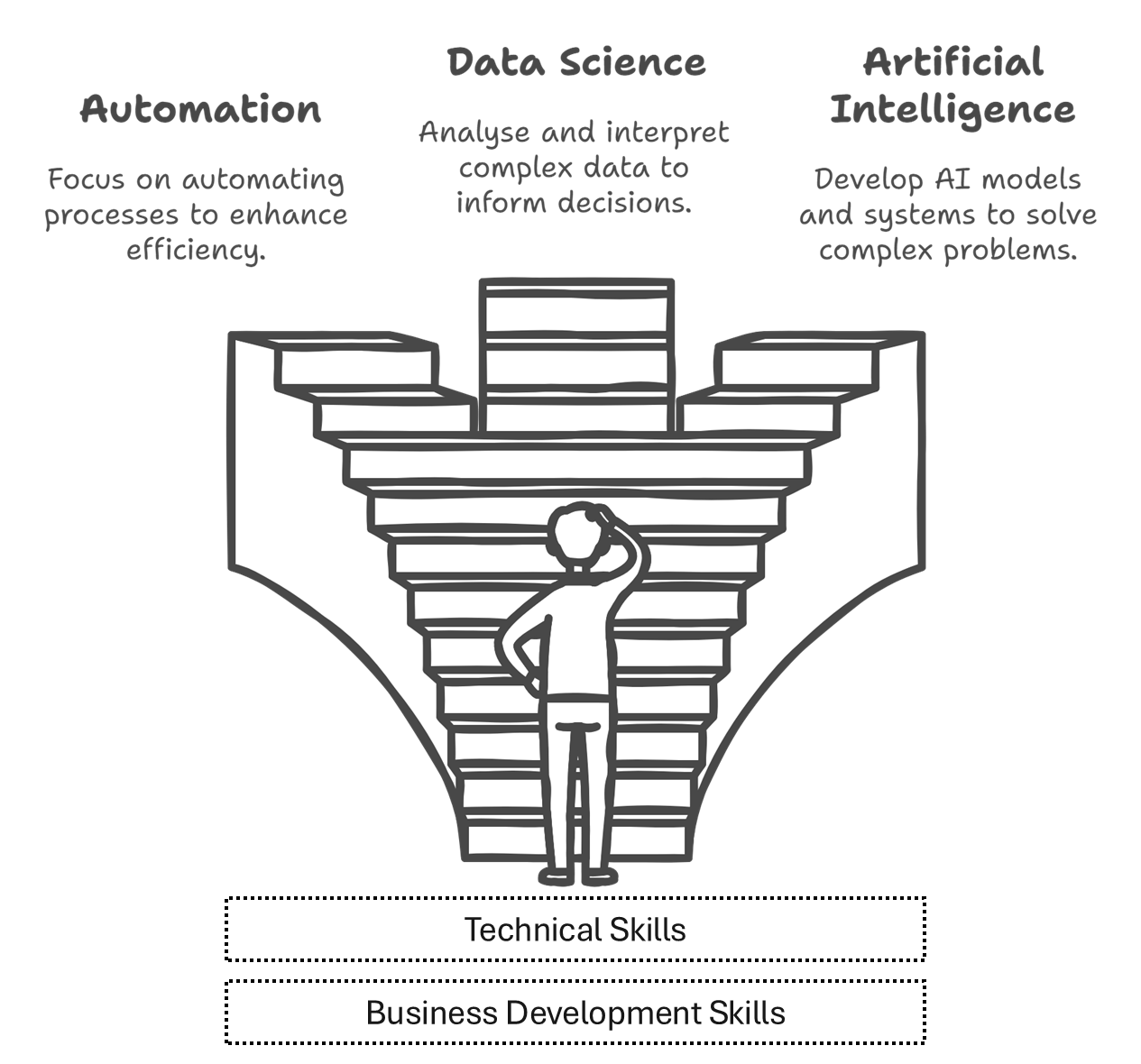
Three paths, one staircase: technical skills and business development skills underpin them all.
"AI and automation" covers a lot of ground. Broadly, there are three paths you can grow into:
- Automation: focusing on automating processes to enhance efficiency.
- Data science: analysing and interpreting complex data to inform decisions.
- Artificial intelligence: developing AI models and systems to solve complex problems.
If you plot those paths on a map from "automation" to "artificial intelligence", you'll find roles like RPA analyst/developer and automation engineer on one side, and data scientist and AI/ML engineer on the other. As you build skills and take on more responsibility, you move across that map. Very few people stay in one box forever, and that's a good thing.
The landscape itself is also changing. We've moved from robotic process automation (mimicking human tasks) and business process automation (optimising processes) to agentic AI, where the agent becomes part of the workforce. I've written more about that shift in a separate post, but the career takeaway is simple: whichever path you choose, AI will be part of it.
2. Identify the key skills to develop
Success in automation and AI comes from three types of skills working together: technical, soft and business. Most people over-invest in the first and forget the other two.
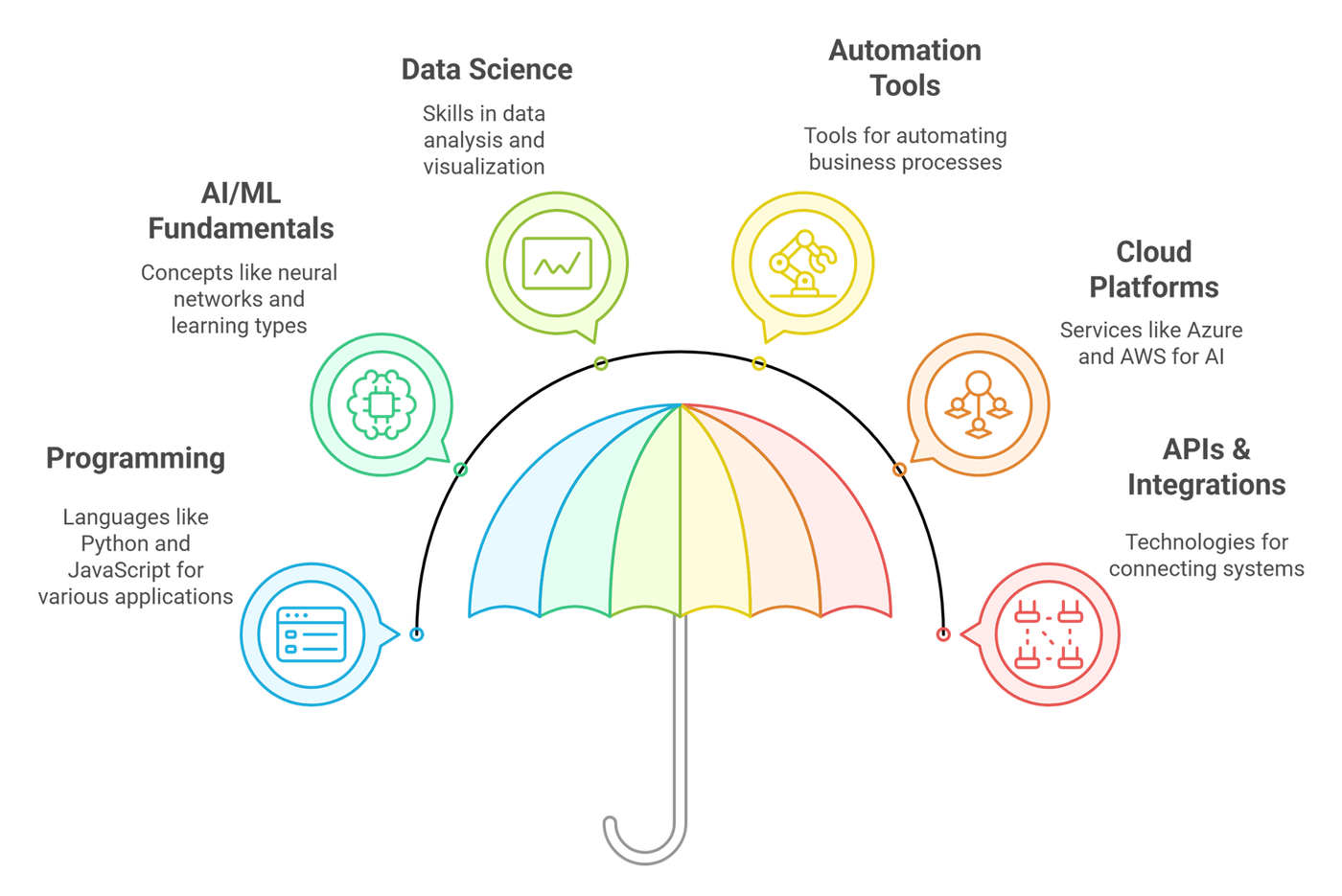
Technical skills are the umbrella most people picture:
- Programming: languages like Python and JavaScript for various applications.
- AI/ML fundamentals: concepts like neural networks and learning types.
- Data science: data analysis and visualisation.
- Automation tools: the tools used for automating business processes.
- Cloud platforms: services like Azure and AWS for AI.
- APIs and integrations: the technologies used to connect systems.
You don't need all of these on day one. Pick one or two that match the path you're leaning towards and go deep before you go wide.
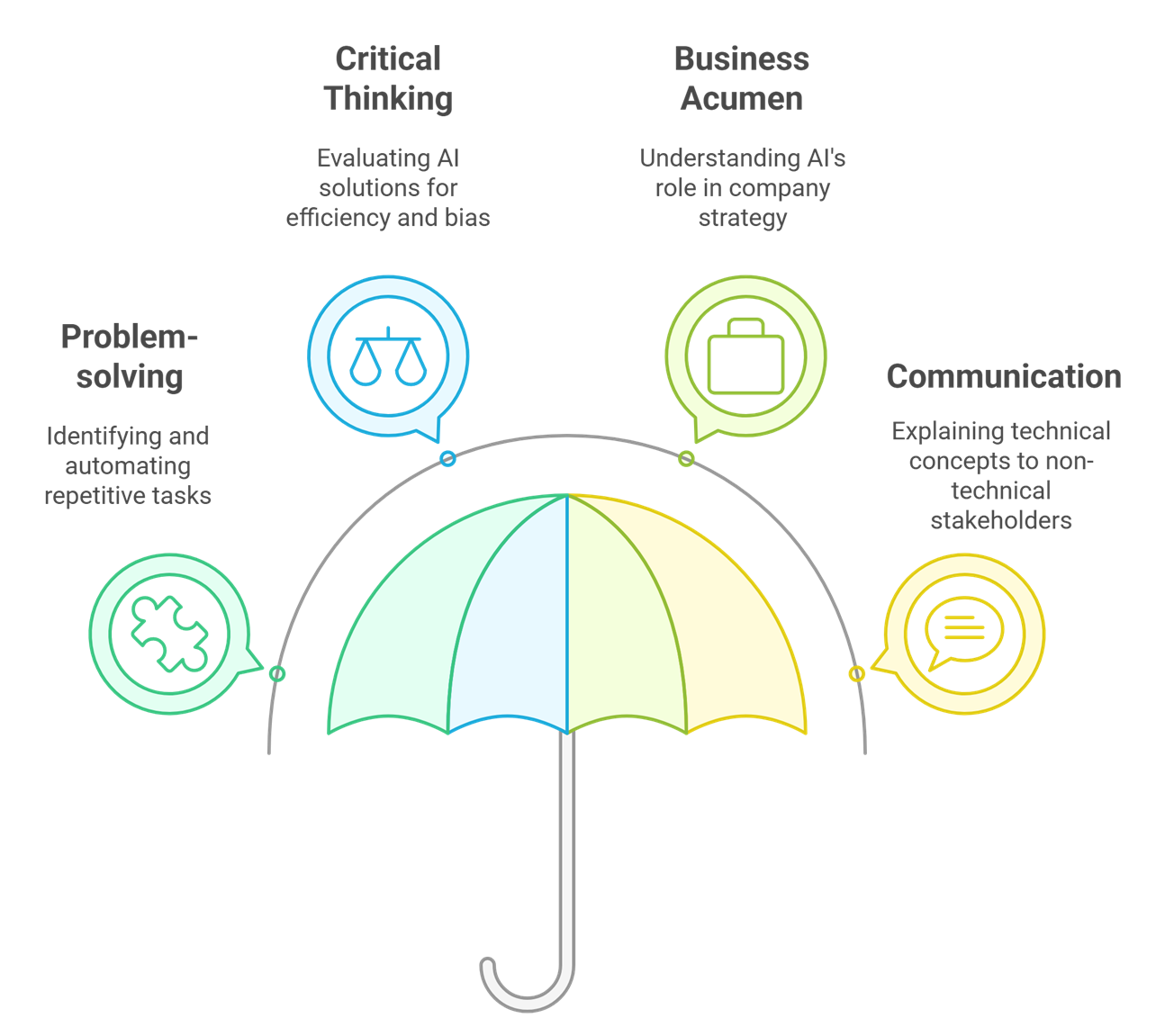
Soft and business skills are what turn a good developer into someone the business trusts:
- Problem-solving: spotting repetitive tasks and working out how to automate them.
- Critical thinking: evaluating AI solutions for efficiency and bias.
- Business acumen: understanding AI's role in company strategy.
- Communication: explaining technical concepts to non-technical stakeholders.
Don't underestimate that last one. The ability to explain a solution in plain language (ELI5 style) will open more doors than any certificate.
3. Develop your learning pathways
There isn't one "correct" route in. I see four pathways that weave together like strands of DNA:
- Formal education: degrees, diplomas and short courses.
- Certifications: vendor and industry credentials that prove you know a specific platform.
- Self-learning: courses, tutorials, blogs and videos at your own pace.
- Practical experience: actually building things, which is where most of the learning sticks.
The best careers mix all four. A qualification gets you through the door, certifications show you've kept up, self-learning fills the gaps, and practical experience is what you'll talk about in the interview.
Some free places to start:
- My learning resources repo: I keep a curated list of free resources split into soft skills (communication, leadership, collaboration), business skills (governance, strategy and business process automation) and technical skills (AI, machine learning, automation and data science) at github.com/JacquiM/Automation-AI-Learning-Resources.
- UiPath Academy: learn automation skills at your own pace, earn automation credentials and tap into the community.
- Microsoft Learn: learning paths and modules across Power Platform, Azure, Copilot and more, including modules like Demonstrate the capabilities of Microsoft Power Automate.
- Challenges and skills events: keep an eye out for things like the Microsoft AI Skills Fest. A deadline and a bit of friendly competition do wonders for motivation.
4. Build a portfolio and get a job
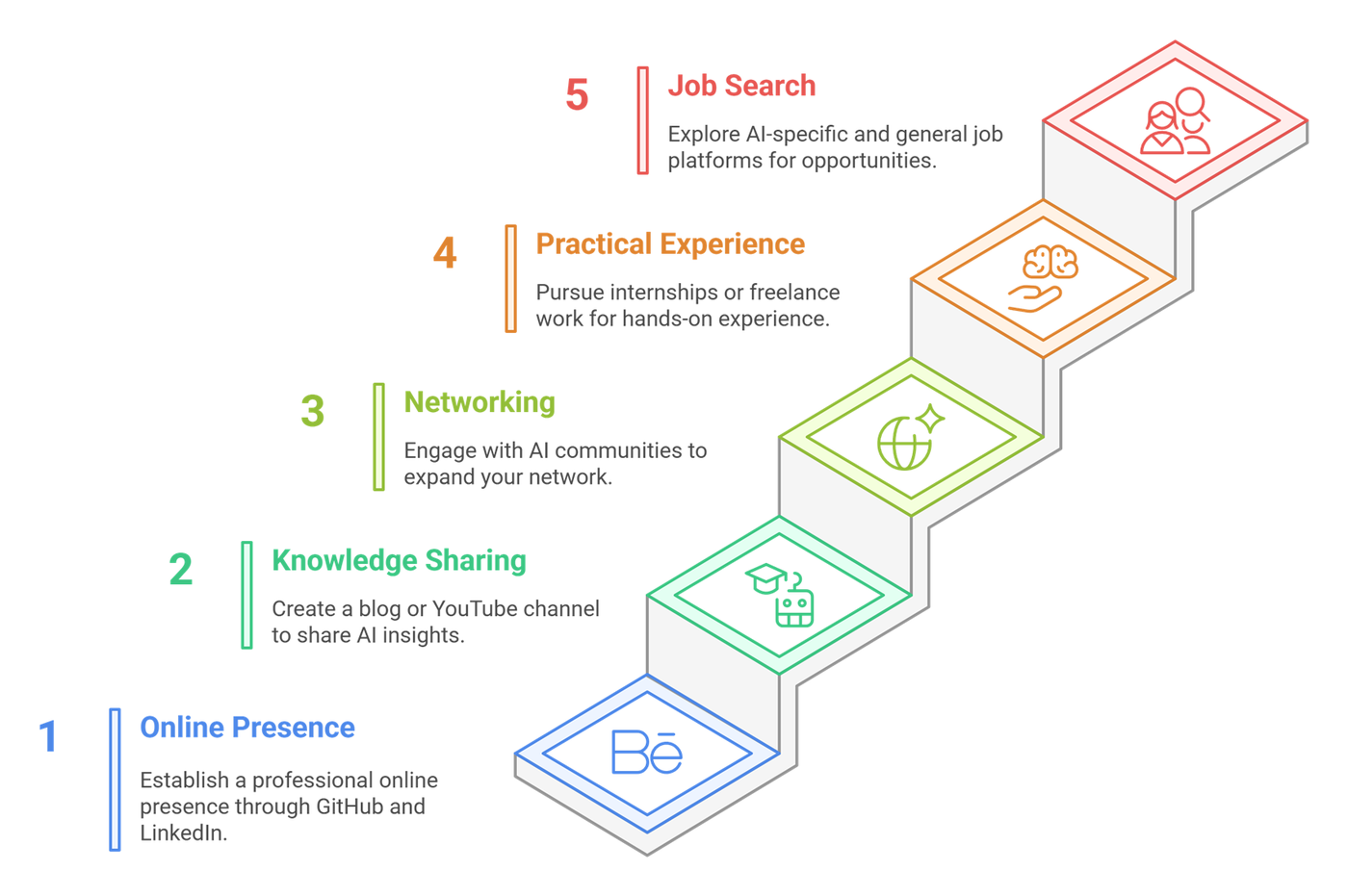
This is the bit everyone wants to skip to, but it works best as a staircase:
- Online presence: establish a professional presence through GitHub and LinkedIn. Your GitHub is your portfolio.
- Knowledge sharing: create a blog or YouTube channel to share what you're learning. Teaching something is the fastest way to find out whether you really understand it.
- Networking: engage with AI and automation communities to grow your network.
- Practical experience: pursue internships or freelance work for hands-on experience.
- Job search: explore both AI-specific and general job platforms for opportunities.
Notice that "job search" is the last step. By the time you get there, you want people to already know who you are and what you can do.
5. Stay connected through communities
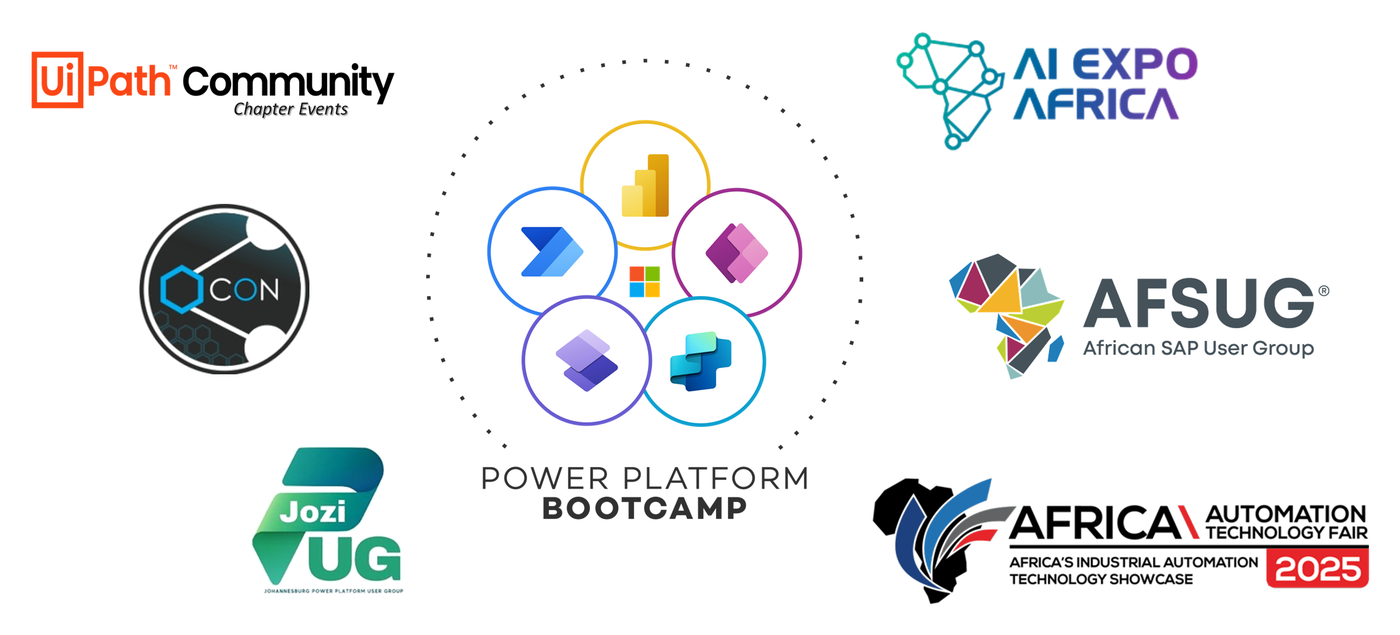
A few of the communities and events in the South African tech scene.
This is the step I'm most passionate about, because communities are where so much of the real learning (and opportunity) happens. In South Africa there's a lot happening if you know where to look:
- UiPath Community chapter events for all things automation.
- JoziUG, the Johannesburg Power Platform user group, and the Power Platform Bootcamp.
- 0xCon for the cybersecurity crowd.
- AFSUG, the African SAP User Group.
- AI Expo Africa and the Africa Automation Technology Fair.
Go to a meetup. Ask a question. Volunteer to help. Eventually, put your hand up to speak. The people you meet at these events become your mentors, your collaborators, your references and, sometimes, your next employer.
In conclusion
You don't need to have it all figured out to start a career in AI and automation. Understand the landscape, pick a path, build a balanced set of technical, soft and business skills, learn in public and find your people. The field moves fast, but the community moves with you. If you're just getting started, I'd love to see you at one of the events above.