Building a Business With AI: Lessons From a (Panda) Penguin Sanctuary
What would it take to go from "wouldn't it be cool if…" to a business with a name, a logo, a company profile and a live website, using AI to do most of the heavy lifting? That was the question Chrismie Otto and I set out to answer on stage at the Data & AI Community Day in Durban in July 2026, in a session we co-presented called Building a Business With AI.
To keep it practical, we didn't use a hypothetical "Company X". We used a business idea that was a lot more fun: a penguin sanctuary. With a panda twist, obviously. (I'm The JPanda. It was always going to have a panda in it.)
Here's how the session flowed, and what you can take from it for your own idea.
The process to creating a business
Before touching any tools, it helps to see the whole journey. This is the roadmap we worked from:
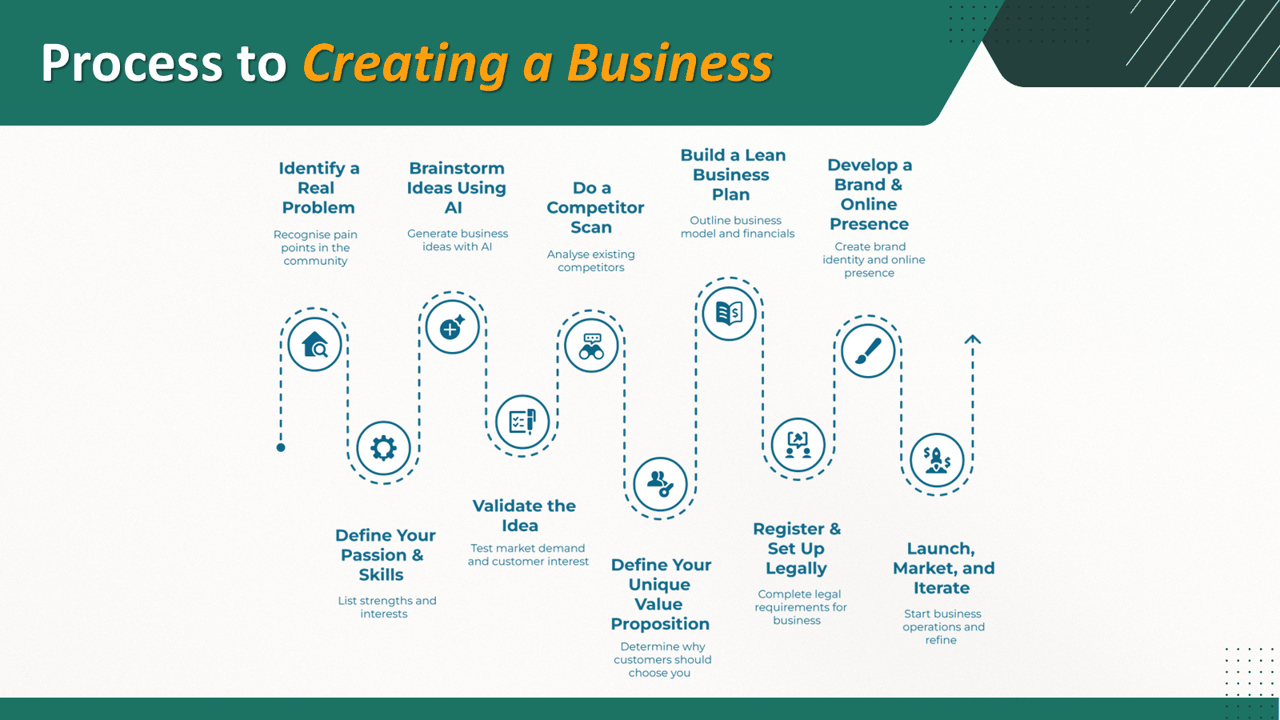
From identifying a real problem all the way to launching, marketing and iterating.
- Identify a real problem: recognise pain points in your community
- Define your passion and skills: list your strengths and interests
- Brainstorm ideas using AI: generate business ideas with AI
- Validate the idea: test market demand and customer interest
- Do a competitor scan: analyse existing competitors
- Define your unique value proposition: why should customers choose you?
- Build a lean business plan: outline your business model and financials
- Register and set up legally: complete the legal requirements for your business
- Develop a brand and online presence: create a brand identity and get online
- Launch, market and iterate: start operations and keep refining
AI can help with almost every step, but notice that the first two are entirely about you. AI can't tell you which problem you care enough about to solve for the next five years.
Step 1: Defining the business idea
The most difficult part should be finding an idea that you can turn into a business. Everything after that has never been easier.
For our sanctuary, we broke the idea into the products and services it could realistically offer:
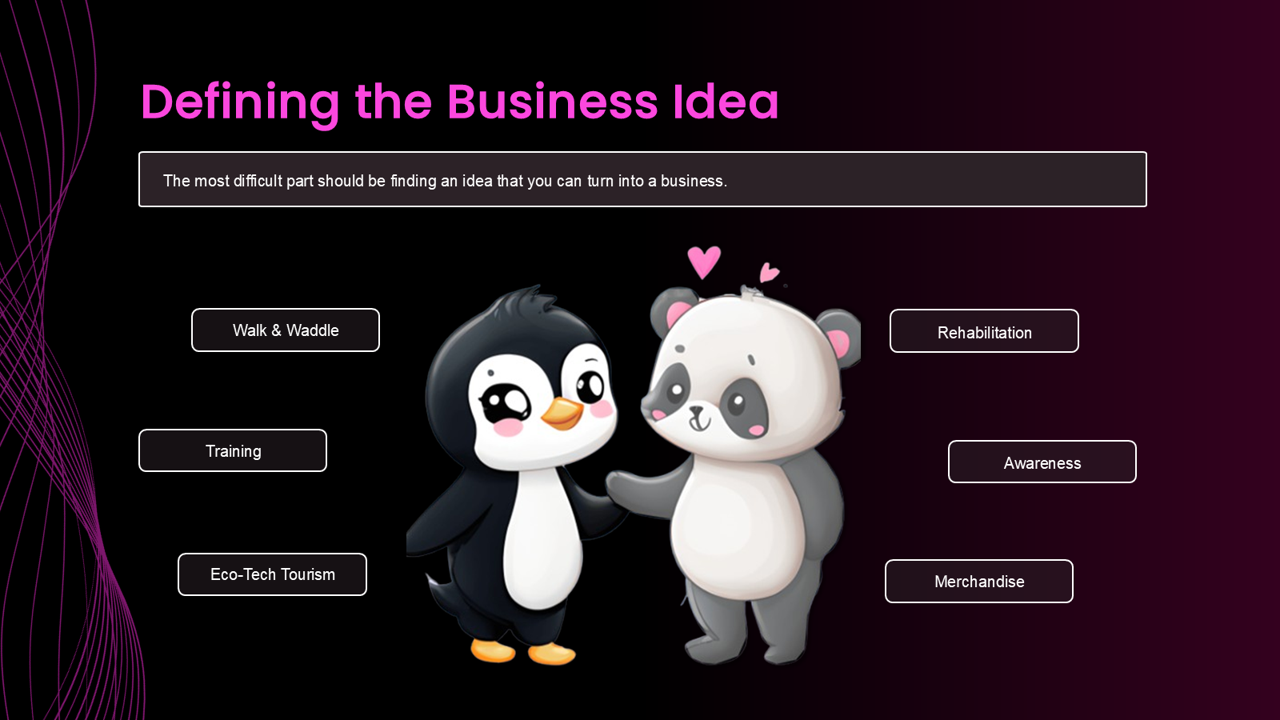
One idea, six possible revenue streams.
- Rehabilitation: the core purpose
- Awareness: education and outreach
- Training
- Walk & Waddle: experiences with the penguins
- Eco-tech tourism
- Merchandise: because who doesn't want a penguin plushie?
This is the step where an AI assistant is genuinely useful as a brainstorming partner. Ask it to expand an idea into services, then ask it what could go wrong with each one.
Step 2: Creating the company profile
Once you know what you're selling, you need something to show people. We built the whole company profile live, step by step:
- Drafting the content with ChatGPT: who we are, what we do, the services
- Creating the logo in Canva
- Designing the company profile from a Canva template
- Designing the products and services catalogue with Napkin AI, which turns text into visuals
- Finalising the profile by bringing it all together, with real imagery
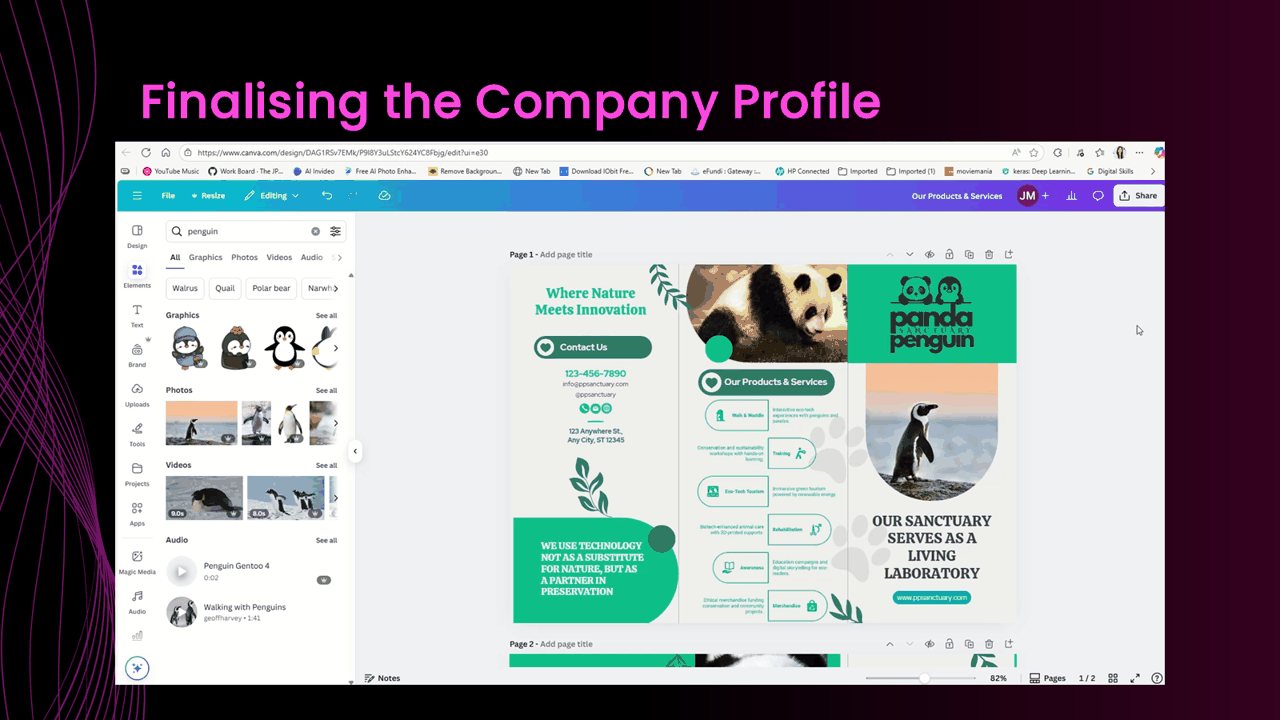
The finished profile, built in Canva with AI-drafted content: "Where Nature Meets Innovation".
The point wasn't that any one tool is magic. It's that each step that used to need a copywriter, a designer or a weekend now takes minutes, as long as you know what you want to say.
Step 3: Creating and deploying the website
Next, we used an AI app builder to generate a website from the company profile. You describe what you want, the AI builds it, and you refine it with follow-up prompts. Then we pushed it to a GitHub repository and deployed it, which meant a real, live site without paying for hosting.
This is the step that impresses people the most, and it's also the one that needs the most supervision. AI will happily make things up to fill gaps, so read every line before it goes live. You're the one who's accountable for what it says.
Step 4: Getting the business "out there"
A website nobody can find is just an expensive (or in this case, free) secret. Marketing 101 came down to three things:
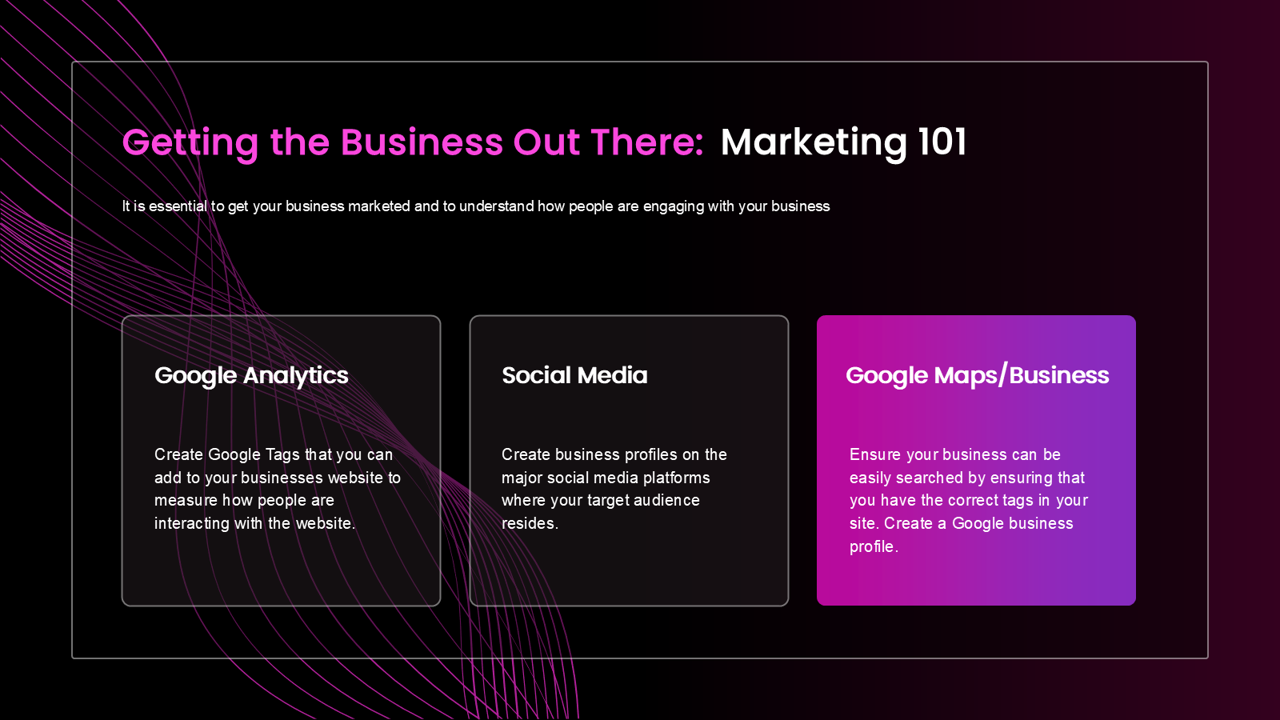
Measure, be findable and show up where your audience already is.
- Google Analytics: create Google tags and add them to your website so you can measure how people are interacting with it.
- Google Maps / Google Business Profile: make sure your business can be easily searched by using the right tags on your site, and create a Google Business Profile.
- Social media: create business profiles on the major platforms where your target audience lives, not every platform that exists.
We then walked through setting up Google Analytics, creating a Google Business Profile and, most importantly, actually monitoring the analytics once traffic starts coming in. Setting it up is easy. Looking at it every week is the discipline.
Your action points
We closed the session with four things to do, and I'll leave you with the same list:
- Ideate. Find an idea. Start with something in your day-to-day life.
- Create a business. Turn it into a business with real products or services.
- Get the business "out there". Start marketing your business. Get seen!
- Measure! Gather insights into your progress and use them to drive decisions.
AI won't come up with your passion or take responsibility for your business. But it will build the logo, draft the profile, generate the website and free up the hours you'd otherwise spend on admin. That leaves you with the part that actually matters: deciding what's worth building.
A huge thank you to Chrismie Otto for co-presenting. And if anyone wants to fund an actual panda penguin sanctuary… you know where to find me. 🐧🐼